JavaScript required

This website uses a passcode gate and cannot be displayed without JavaScript. Please enable JavaScript in your browser and reload the page.

Initiatives — 06 of 08

Documented
priorities.

The work below is attributed carefully. A commissionerate initiative is not a personal creation, and a state programme is not a local one. Every claim on this page carries the level at which it belongs, and every figure carries its source.

How to read this page

Four levels of attribution.

Commissionerate initiative Introduced or launched within Navi Mumbai Police during his tenure as Commissioner.
Personal initiative Attributed to the officer individually by a named source. This site applies the label sparingly.
Department-wide A Maharashtra Police measure applied in Navi Mumbai along with other units.
State or national programme A government programme the commissionerate implements rather than originates.

Where reporting credits the Commissioner personally with leading a campaign, that is stated. Where the work is the commissionerate’s, it is described as the commissionerate’s. The distinction is preserved throughout.

Documented initiatives and priorities

01

Emergency response — Dial 112

Commissionerate implementation

112 is India’s single national emergency number, adopted across states; the commissionerate’s work is in how it performs locally. Navi Mumbai Police has run an awareness effort under the banner Alert Navi Mumbaikar — Dial 112, covering emergency response alongside cybercrime and narcotics awareness.

The measure that matters operationally is response time. Speaking at the launch of the commissionerate’s women’s safety squad in May 2023, Milind Bharambe described the position then reached:

We have a response time of just 5.15 minutes after ending a distress call.
Milind Bharambe, Commissioner of Police, Navi Mumbai — quoted in the Free Press Journal, May 2023

Later reporting on the commissionerate has described an average response time under six minutes, with the integration of fire and health services stated as a further intention.
02

Nasha Mukt Navi Mumbai — anti-narcotics

Commissionerate campaign, led by the Commissioner

Reporting on the campaign names Milind Bharambe as leading it. Its significance lies less in volume than in where the effort is directed, because the four layers of a narcotics problem require entirely different police responses.

Street-level enforcement

Action against retail peddling is the most visible layer and the least durable on its own: supply reconstitutes unless the layer above it is reached. It remains necessary, because visible availability is itself what normalises use.

Supply-chain disruption

The strategic objective is the network rather than the seller. Reported operations under the campaign — conducted under the names Operation Garuda, Operation African Kitchen and Operation Prahar — have been described as targeting trafficking structures rather than end-point sales.

Intelligence and inter-state coordination

Navi Mumbai sits on corridors that carry inter-state movement, so supply frequently originates elsewhere. Reporting describes a dismantled Punjab-linked heroin network and a hydroponic cannabis racket with international connections — both requiring cooperation well outside the commissionerate’s own jurisdiction.

Prevention and awareness

Enforcement reduces supply; it does not reduce demand. Awareness work in educational institutions and housing societies is the layer that addresses the other side of the problem, and it is the slowest to show results.

Making Navi Mumbai completely drug-free is our top priority. We are targeting not just local peddlers but also international and inter-state supply chains.
Milind Bharambe, Commissioner of Police, Navi Mumbai — quoted in the Free Press Journal

Reported figures

₹136.03 cr

Value of narcotics seized over four years

1,993

Cases registered under the NDPS Act

2,396

Persons arrested

1,571

Foreign nationals deported

Source: Free Press Journal reporting on the Navi Mumbai Police Commissionerate’s four-year anti-narcotics record. These are commissionerate figures for work carried out by many officers and units; they are not presented as an individual’s achievement. Figures reported by the press have not been independently audited by this site.

03

Women’s safety

Commissionerate initiative

The commissionerate’s women’s safety work is documented across three distinct components, each answering a different part of the problem.

Nirbhaya Squad — presence in public space

Launched on 11 May 2023 at Vashi by the then Deputy Chief Minister, Devendra Fadnavis, the squad was reported as comprising ten four-wheelers and forty two-wheelers staffed by women police officers, with each police station receiving vehicles. Its purpose is patrol presence where women are most exposed. Milind Bharambe described the deployment at the time:

They will be available in high footfall areas, outside colleges, markets, and other identified areas where women feel unsafe.
Milind Bharambe, Commissioner of Police, Navi Mumbai — quoted in the Free Press Journal, May 2023

Women’s cells — accessibility at the station

Reporting describes a women’s cell established at every police station in the commissionerate, staffed so that a woman complainant is not required to recount her account to male personnel. This addresses the point at which many complaints are lost — not the offence, but the first encounter after it.

Women’s assistance centre — support after the report

A women’s safety project and assistance centre at the Savali centre in Sector 7, Nerul, was inaugurated in May 2023, reported as providing counselling and stay accommodation, including for women rescued from exploitation.

Taken together the three address prevention, response and aftercare. Nothing further is claimed here: this site does not present outcome statistics for women’s safety, because none from an official source was located.

04

Cybercrime capability

Commissionerate initiative

An independent Cyber Police Station for Navi Mumbai was inaugurated at Nerul in May 2023, upgrading what had been a cyber cell into a full police station. Reporting describes cyber cells retained at every police station alongside it, with a value threshold determining where a case is handled — complaints below ₹50 lakh at station level, above that at the Cyber Police Station.

The design point is worth stating plainly, because it is the difficult part of cyber policing: most cyber complaints are ordinary in value and enormous in number, while a small proportion require specialist capacity. A structure that sends everything to a specialist unit collapses under volume; one that sends nothing there cannot handle the serious cases. The threshold is an attempt to resolve that.

Public awareness is treated as part of the same capability. The commissionerate has been reported as running cyber-awareness communication through messaging and video channels — appropriate, since prevention is considerably more effective than recovery in fraud of this kind.

05

Investigation and prosecution systems

Commissionerate initiative

Reporting on the commissionerate describes a set of internal systems introduced to shorten the distance between an incident and a conviction. Each targets a specific and well-known point of failure.

NELSON

Case tracking — so that a case’s state is known rather than asked after.

e‑PAIRAVI

Court-process documentation — the stage at which sound investigations are most often lost.

i‑BIKES

Faster forensic access at a scene, where delay degrades evidence irreversibly.

EMC

An Evidence Management Cell for the systematic custody of case material.

Reporting states that the conviction rate in the commissionerate rose from 35 per cent in 2023 to 44 per cent in 2024.

Source: Free Press Journal reporting on technology-led policing in the Navi Mumbai Commissionerate. Conviction rates depend on prosecution, courts and case composition as well as on investigation, so the figure should be read as an indicator rather than as a measure of any single factor.

06

Policing must listen

Statutory duty & commissionerate practice

The Navi Mumbai Police website states the force’s purpose in terms of maintaining law and order, preventing crime and resolving the grievances of citizens, and presents the site itself as a channel for engaging with them. The Commissioner’s published message frames grievance redressal not as a courtesy but as part of the job.

That framing has consequences. A grievance mechanism is the point at which a citizen tests whether the institution is real — whether a complaint produces a record, a record produces action, and action produces an answer. Each break in that chain costs more than the individual case, because it teaches the complainant and everyone they tell what to expect next time.

The commissionerate publishes routine citizen services online — complaint registration, e-challan payment, police clearance certificates, lost-and-found reporting, tenant verification, sound permissions and right-to-information requests — alongside emergency and specialised helplines: 112 for police emergencies, 1091 for women, 1098 for children, 1930 for cyber fraud and 108 for ambulance.

Community-facing work reported alongside these includes foot patrolling and awareness engagement with housing societies — the routine, unremarkable contact through which a station becomes approachable before anything goes wrong.

This site does not publish complaint or disposal statistics. None from an official source was located, and figures of that kind will not be estimated.

07

Personnel and family welfare

Commissionerate initiative

Reporting on the commissionerate describes welfare activity directed at police personnel and their families, including employment fairs for police families and organised gatherings held under the names Jallosh and Diwali Melava.

These belong on a page about policing priorities for the reason set out on the leadership page: the condition of the force determines what the force can deliver. Welfare work is not adjacent to operational capability — over any sustained period, it is one of its inputs.

Public Engagement

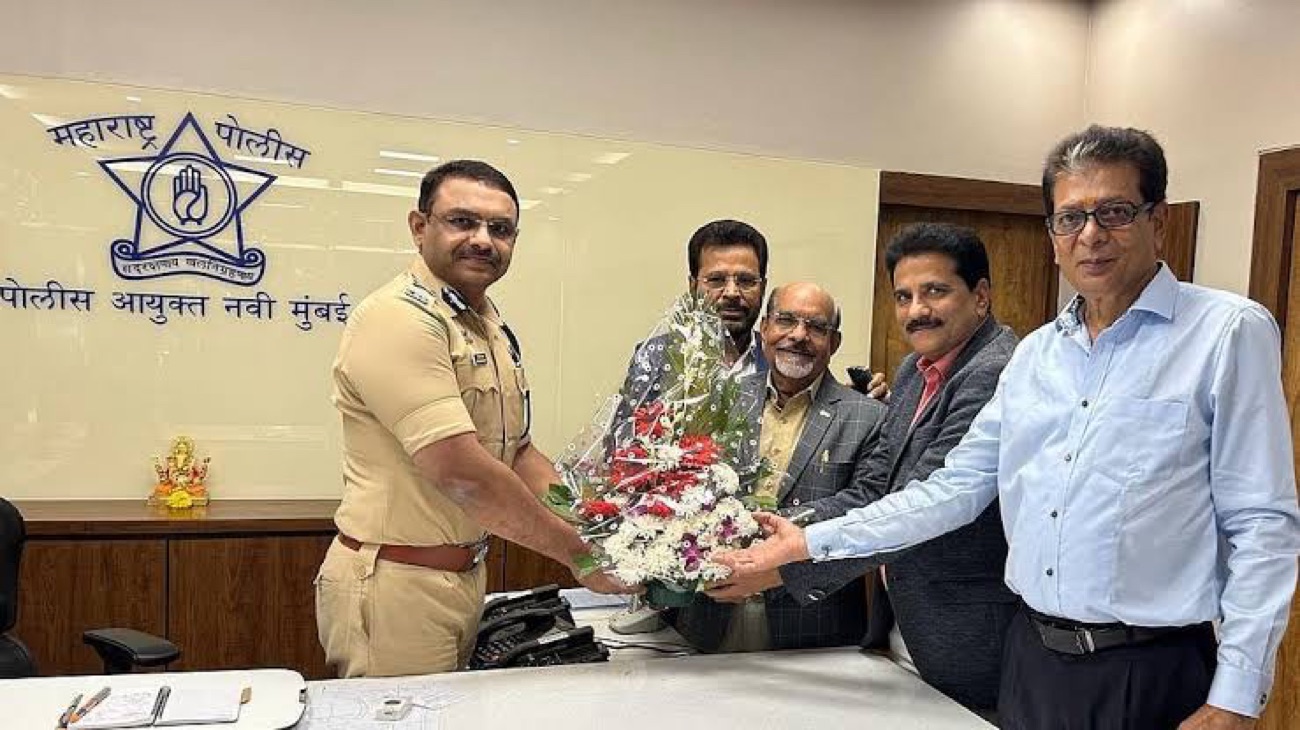
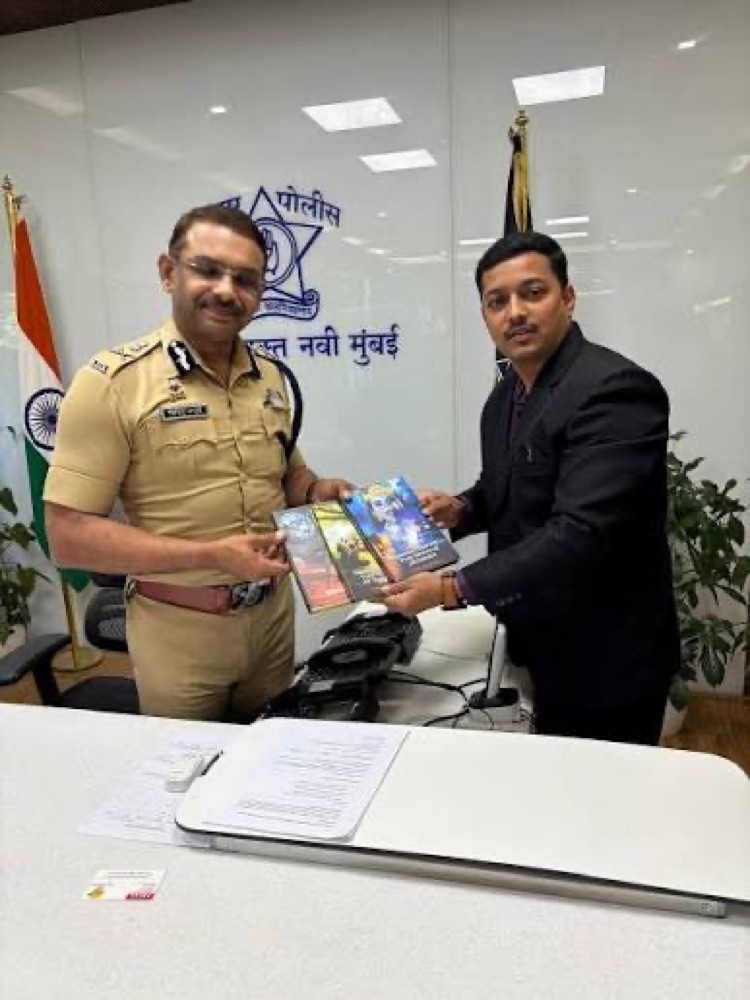
Much of the work happens in an office, in front of people who came to be heard.

Milind Bharambe in uniform receiving a bouquet from a delegation of four visitors at the Navi Mumbai Commissioner of Police office.
A citizens’ delegation at the commissionerate headquarters.
Milind Bharambe in uniform receiving a set of publications from a visitor at the Navi Mumbai Commissioner of Police office.
Receiving material from a member of the public at the commissioner’s office.

An institution that will not receive a complaint has already decided what it will never know.

Service recognised