Journey — 03 of 08
From field
to command.
Twenty-eight years of service, set out as the sequence of grounds it was served on. Only appointments confirmed by official listings or established reporting appear here; where a date is not on the public record, none is asserted.
Career timeline
Scroll the archive sideways
-
1997
Appointment
Indian Police Service
Maharashtra cadre
Verified — official orderEntry into the IPS and allotment to Maharashtra — the cadre in which the whole of the career that follows has been served.
Probation and early service place an officer in subordinate and then independent charge on the ground, where the work is direct and the consequences immediate.
-
Field
Early & mid service
Operational and district-level charge
Maharashtra
Period — specifics unpublishedThe formative years of an IPS career are spent on ground postings. This site does not list specific districts or dates for this period, because no official source consulted sets them out and an unverified posting list would be invention.
What the period consists of is not in doubt: independent charge of a defined area, direct public contact, and decisions taken alone and quickly.
-
2015
15 April 2015 – 28 April 2017
Joint Commissioner of Police (Traffic)
Mumbai Traffic Police
Verified — Mumbai Traffic PoliceHead of the traffic organisation of India’s densest metropolis, with charge of enforcement, signalling, road-safety work and the movement plans that govern processions, festivals and emergencies.
The Mumbai Traffic Police’s own record of former heads gives these dates exactly.
-
2017
On promotion
Special Inspector General of Police
Aurangabad Range
Verified — reported transferSupervisory command of a range — a group of districts — rather than charge of a single one. A range officer sets standards across units, arbitrates between them, and intervenes directly only when the situation requires it.
-
2019
State headquarters
Special Inspector General of Police (Law & Order)
Maharashtra State, Mumbai
Verified — official designationLaw-and-order responsibility at state headquarters. At this level the instruments are policy, coordination between commissionerates and districts, and the allocation of state reserves — not direct operational command.
-
Crime
Until December 2022
Joint Commissioner of Police (Crime)
Mumbai Police
Verified — transfer orderCharge of the crime portfolio of the Mumbai Police — the branch machinery of investigation, specialised units and organised-crime work, as distinct from the city’s territorial divisions.
This was the appointment held immediately before the move to Navi Mumbai.
-
2022
14 December 2022 – present
Commissioner of Police
Navi Mumbai
Current appointmentUnified command of the Navi Mumbai Police Commissionerate, on promotion to Additional Director General of Police.
The Government of Maharashtra continues to list him in this appointment. The documented work of the commissionerate under his command is set out on the initiatives page.
Stage One
Why field postings decide everything that follows.
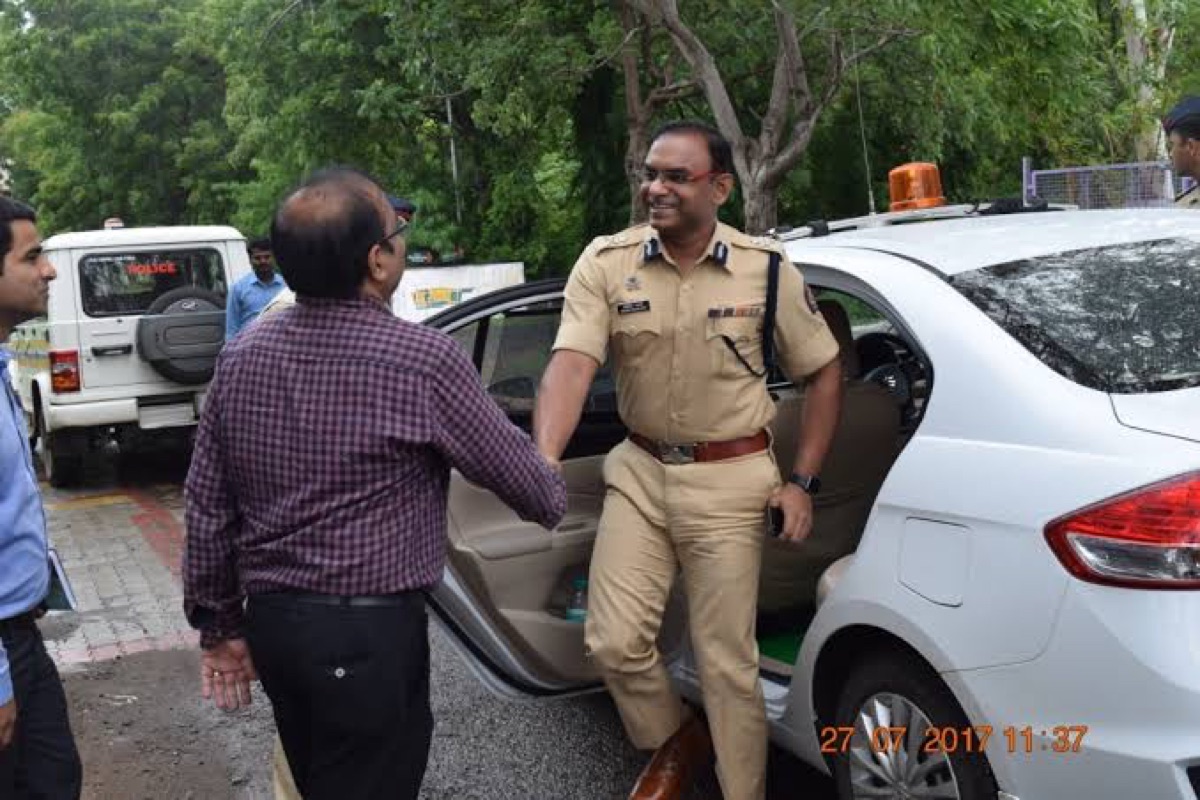
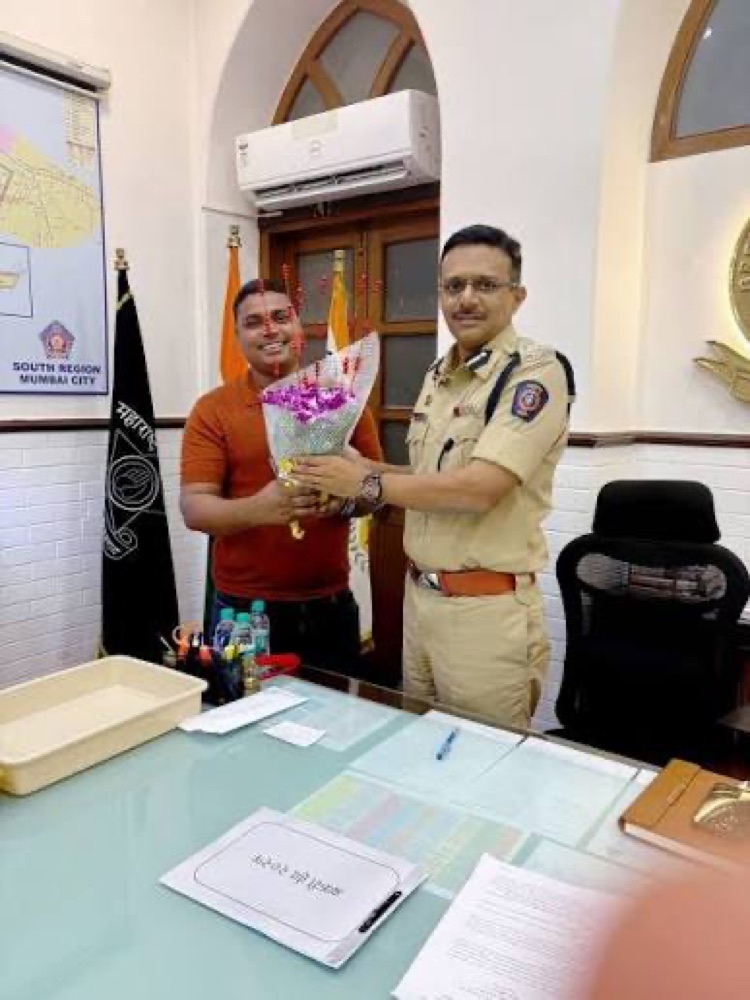
An officer’s first years on the ground are the only period in a career when policing is entirely unmediated. There is no staff to filter the information, no branch to hand the case to, and very often no senior officer within reach at the moment a decision is required.
Four things are formed there, and they are difficult to acquire later. Local knowledge — which lane, which market, which hour, which recurring dispute. Public interaction — the practised judgement of how a crowd is behaving before it behaves badly. Prevention — the recognition that most of what an officer stops never becomes a file. And decision under pressure — the willingness to commit to a course of action on incomplete information and to answer for it afterwards.
District-level charge adds a further dimension: an officer becomes responsible not for an incident but for a place, and for the aggregate of everything that happens on it over a year. That is the first genuine experience of command rather than of duty.
Stage Two
The complexity of policing Mumbai.
Mumbai is not simply a large city to police; it is a city in which every ordinary policing problem is multiplied by density. Population is stacked vertically and packed horizontally. A single suburban station can move a district’s worth of people in an hour. Public space is scarce and therefore contested.
Mobility shapes everything. The daily movement of millions along a small number of north–south corridors means that a stalled vehicle is not a local inconvenience but a citywide one, and that any incident requiring closure has immediate consequences several kilometres away.
Public events occur at a scale few forces anywhere manage routinely — religious processions, immersions, political gatherings and sporting occasions that fill arterial roads by design rather than by accident.
Economic concentration brings its own crime profile: financial offences, commercial disputes and the organised activity that follows large money. Community diversity requires a force that can be trusted across languages, faiths and economic strata simultaneously. And emergency response must work in built environments where access itself is the hardest part of the problem.
Milind Bharambe’s Mumbai service is documented in two distinct appointments — Joint Commissioner of Police (Traffic) and, later, Joint Commissioner of Police (Crime). They are different jobs in the same city, and this site keeps them distinct rather than merging them into a general claim of “Mumbai experience”.
Stage Three — Mumbai Traffic Police, 2015–2017
The city in motion.
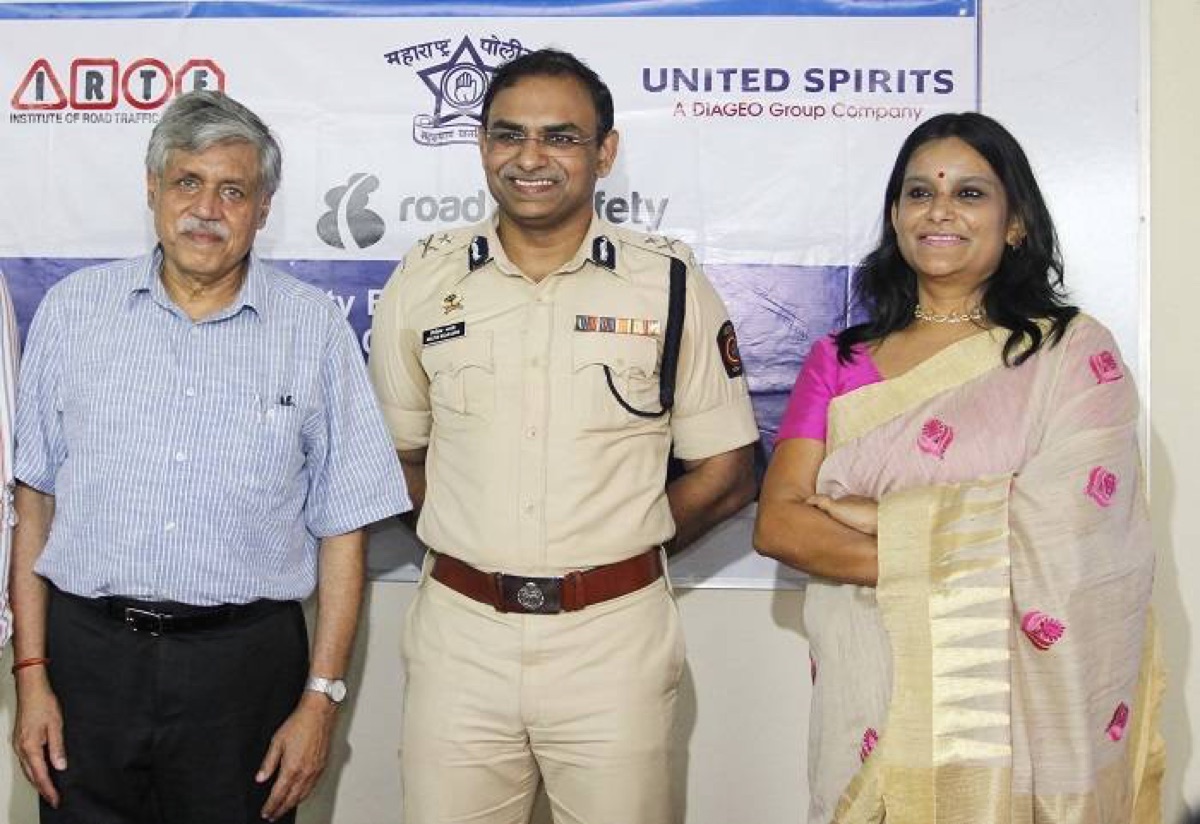
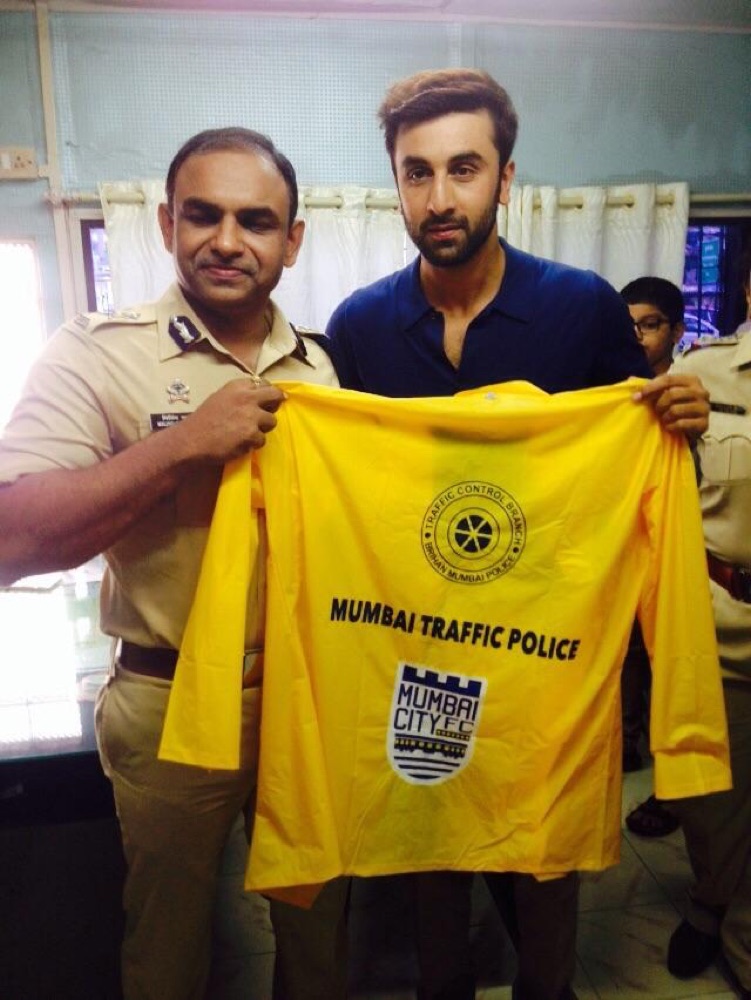
Traffic policing is routinely mistaken for enforcement. Enforcement is one of its instruments; the responsibility is considerably larger, and in a metropolis it is one of the few police functions that every resident experiences personally, every day.
Mobility is the first obligation — keeping the network flowing, because the cost of failure is measured in millions of hours. Safety is the second, and the more serious: road casualties are among the largest categories of preventable death in any Indian city, and reducing them is police work in the most literal sense.
Planning follows: signal timing, one-way schemes, junction geometry, parking regulation and the movement plans drawn up for occasions when the ordinary pattern must be suspended. Coordination is constant, because a traffic organisation controls almost none of the infrastructure it manages — roads, signals, transport operators and civic works all belong to other agencies.
Public behaviour is the material the whole system works on, which is why road-safety education sits inside traffic policing rather than beside it. And emergency movement — clearing a path for an ambulance, a fire appliance or a convoy — is the function on which the rest of the emergency system quietly depends.
Stage Four
Range, state, and the return to a city.
The three appointments that follow Mumbai Traffic move steadily away from direct operational contact and then back toward it. As Special Inspector General of Police, Aurangabad Range, the charge was supervisory: several districts, each with its own superintendent, and a role defined by standard-setting rather than instruction. As Special Inspector General of Police (Law & Order) at state headquarters in Mumbai, the frame widened again to the whole of Maharashtra.
Joint Commissioner of Police (Crime), Mumbai reversed the direction. It returned him to a single city and to the investigative machinery of its force — the branch structure that handles what the territorial divisions cannot.
The appointment to Navi Mumbai in December 2022 brought those threads into one command. A commissioner is answerable for law and order, crime, traffic, service delivery and the force itself, simultaneously, on ground he does not get to choose.